
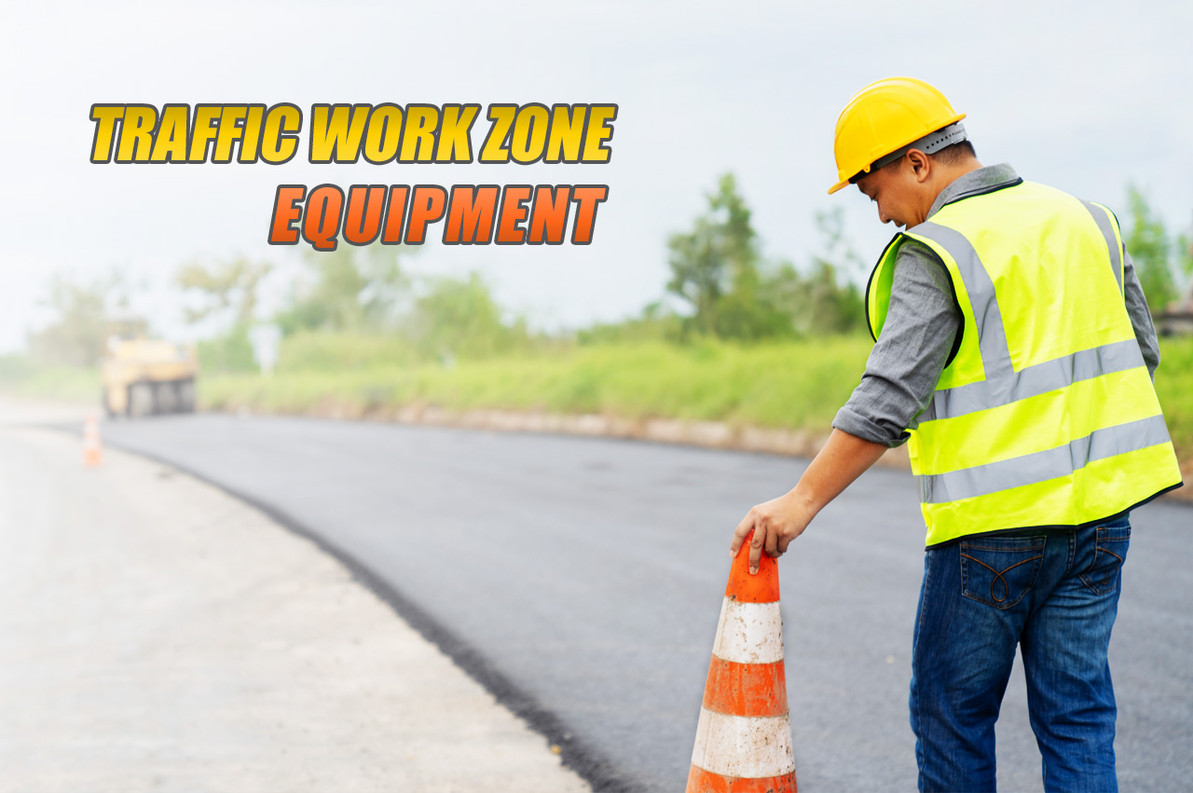
Traffic Work Zone Equipment: Cones, Signs & Barriers for Safer Roadways
Traffic Work Zone Equipment: Cones, Signs & Barriers
Roadway work zones rank among the most hazardous places to work. Crews operate just feet from moving traffic, often with limited sightlines, changing weather, and drivers who aren't paying attention. The equipment separating a worker from a passing vehicle isn't just a compliance checkbox — it's frequently the only thing standing between a safe shift and a serious incident. Getting the right mix of cones, signs, and barriers in place, and knowing the rules behind them, is where every work zone safety plan should start.
Why Work Zone Standards Exist
The Manual on Uniform Traffic Control Devices (MUTCD) is the federal rulebook for how work zones communicate with drivers. It dictates cone height and spacing, sign retroreflectivity, and where devices need to be placed relative to traffic speed and lane configuration. On top of that, OSHA 29 CFR 1926.201 requires flaggers to wear high-visibility apparel that meets MUTCD or ANSI/ISEA 107 standards, and individual state DOTs often layer on their own requirements for specific roadway classes. None of this is optional paperwork — it's the difference between a work zone drivers can read at 55 mph and one they can't.
Traffic Cones: The First Line of Visibility
 Traffic Cones are the most basic and most important tool in any work zone kit, and size matters more than people assume. A 28" cone might be fine for a parking lot or low-speed lot closure, but MUTCD guidance pushes toward taller cones — up to 42" — as posted speeds increase, simply because a short cone disappears into a driver's peripheral vision at highway speed.
Traffix Devices' Enviro-Cone line, available in 28" and slimmer profiles, uses a recycled rubber base that carries roughly 80% of the cone's total weight — the extra weight low to the ground keeps cones upright in wind and passing-truck turbulence without needing sandbags. For higher-speed roadways, the 42" Grabber Cone (Looper-Cone) series steps up further, with a reinforced handle for quick placement and a base that accepts a barricade light for nighttime jobs.
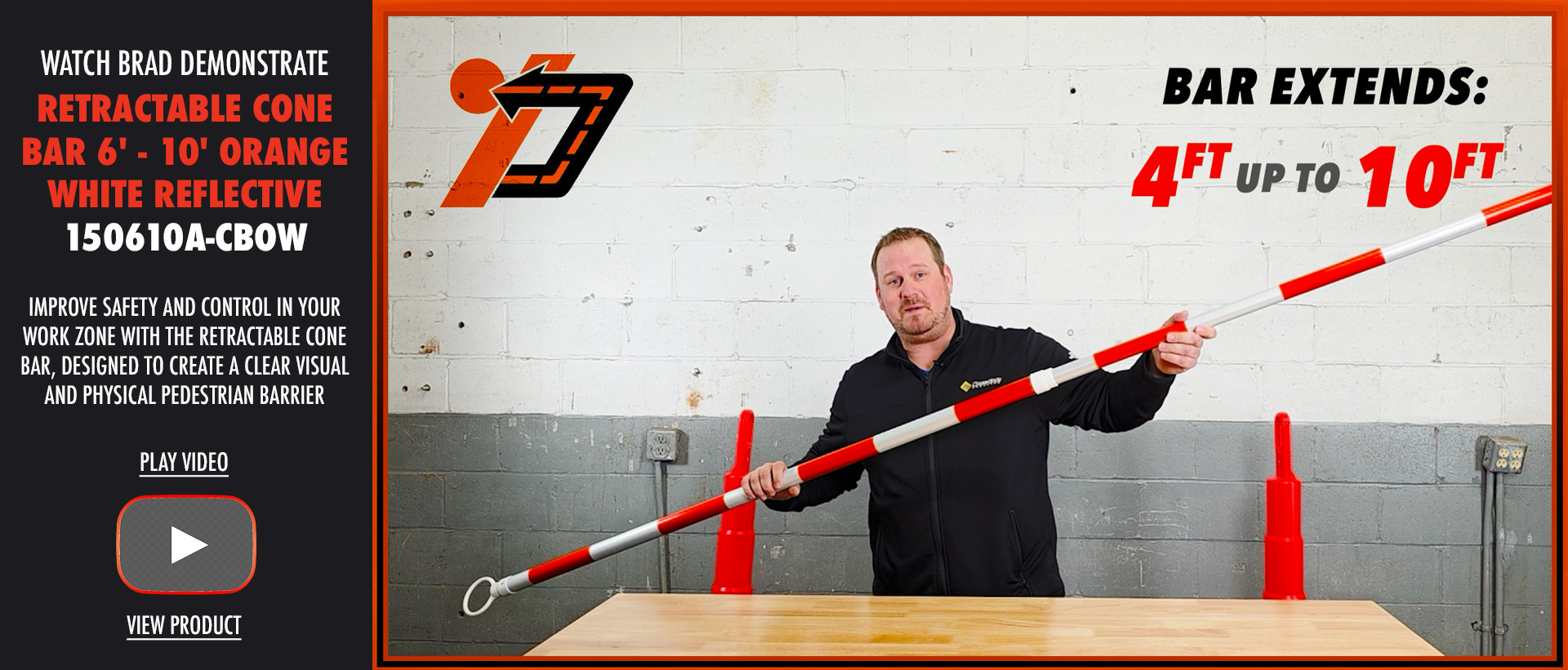
For channeling pedestrians or defining a walking path between cones, a retractable cone bar (like the 6'–10' orange/white reflective model) clips between two cones to form a visible, low-profile barrier — useful for sidewalk closures or short-term pedestrian detours where a full barricade isn't practical.
Watch a video of Brad demonstrating the:
Retractable Cone Bar 6' - 10' Orange White Reflective 150610A-CBOW
Signs: Giving Drivers Advance Warning
Cones tell drivers where not to go; signs tell them why, and how far ahead to start reacting. Reflective vinyl roll-up signs (commonly in 48" formats) are a work zone staple because they pack down small but unroll into a full-size, DOT-legible warning sign in seconds. Materials matter here too — daytime-only jobs can use standard or mesh vinyl, while overnight or low-light work calls for reflective sheeting that stays legible in headlights from a safe stopping distance.
Barricades, Tape, and Lighting: Closing the Gap
 Once cones and signs are in place, barricade tape and lighting fill in the rest of the perimeter. Woven barricade tape (2" x 200' rolls in red/black or yellow "Caution" and "Danger: Do Not Enter" wording) is the fast, low-cost way to cordon off a hazard area, and contractor-grade tape stays pliant even in cold weather instead of cracking and littering the site.
For after-dark or low-visibility work, Y2K barricade lights with impact-absorbing breakaway bases and weatherproof LED circuitry mark cone lines and barricade edges so approaching drivers register the closure well before headlights hit a worker. Reflective triangular flare kits (typically sold as 3-set kits) serve a similar purpose for disabled vehicles or emergency shoulder work, meeting FMVSS 125 and state legal requirements without any tools needed to deploy.
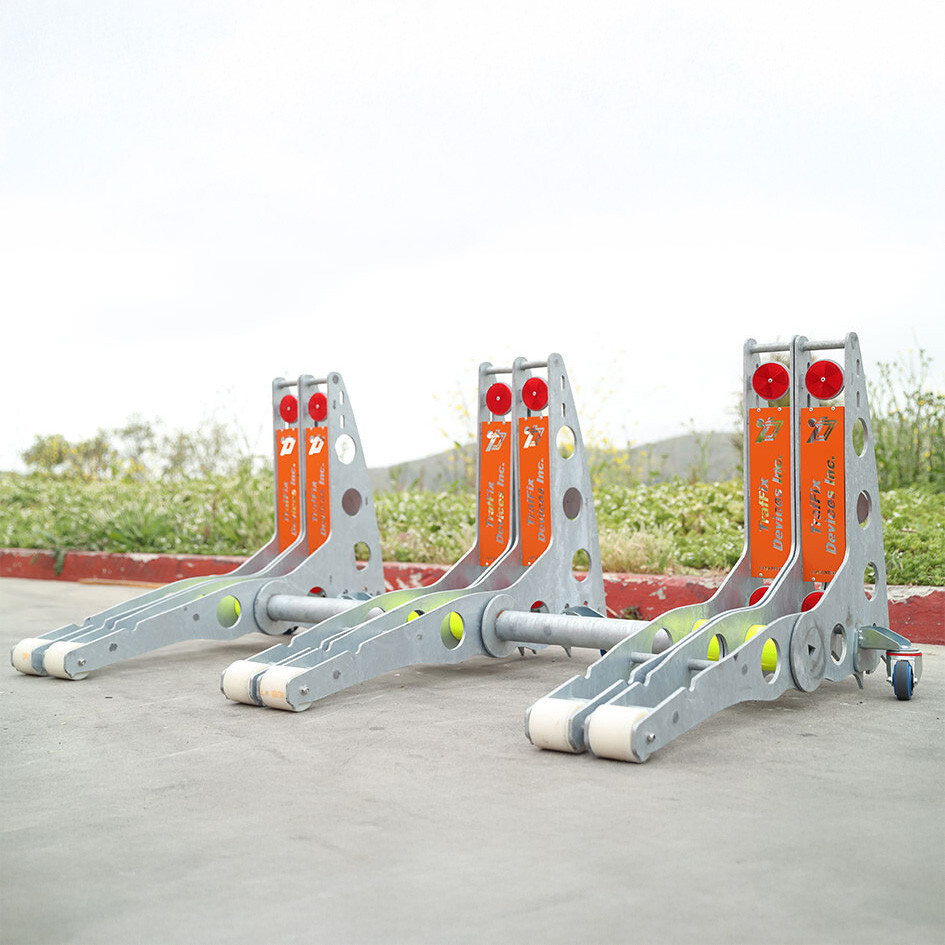
For larger events or higher-risk exposures — a parade route, a public gathering, or a site vulnerable to vehicle incursion — vehicle mitigation systems like TrafFix's Block Axess go a step beyond cones and tape, providing an actual physical barrier against hostile or errant vehicles.
Building a Compliant Work Zone Kit
Most crews don't need every product in this category for every job — a shoulder closure calls for different equipment than a full lane shift or a multi-day highway project. As a starting point:
Short-duration or low-speed jobs typically need standard cones, a roll-up sign or two, and barricade tape. Higher-speed or overnight work adds taller cones, reflective signage, and barricade lighting. Larger public-facing projects may call for vehicle mitigation systems and full flagger PPE alongside standard MUTCD devices.
Safe-Fast stocks MUTCD-compliant traffic work zone equipment from Traffix Devices, Bone Safety, Safety Flag, Presco, and Nightstick, including cones, roll-up signs, barricade tape, warning flags, barricade lights, and flare kits. Browse the full lineup at Safe-Fast's Traffic Workzone category, or for bulk highway or municipal projects, call 1-800-723-3620 or request a Bulk Quote.
Recent Posts
-
A Guide to Hard Hats, Safety Helmets, and Accessories
Keeping Workers Safer: A Guide to Hard Hats, Safety Helmets, and Accessories Head injuries remain on …09.21.26 -
Hi Vis Rain Gear: Staying Safe, Dry, and Seen on the Job
High Visibility Rain Gear: Staying Safe, Dry, and Seen on the Job Rain doesn't pause a job site... i …08.21.26 -
Traffic Work Zone Equipment: Cones, Signs & Barriers for Safer Roadways
Traffic Work Zone Equipment: Cones, Signs & Barriers Roadway work zones rank among the most hazardou …07.23.26