
Confined Space Entry

Confined Space Entry Equipment & Safety Gear
Permit-required confined spaces — tanks, vaults, manholes, silos, pipelines, and similar enclosures — represent some of the highest-risk environments in any industrial or utility workplace. OSHA 29 CFR 1910.146 mandates that workers entering these spaces be protected by a documented entry program that includes atmospheric testing, continuous monitoring, forced-air ventilation, and a capable rescue plan. Failing to comply is one of OSHA's most frequently cited violations, and the hazards — toxic gases, oxygen deficiency, and engulfment — can be fatal within seconds of exposure.
Safe-Fast stocks the full range of confined space entry equipment needed to meet OSHA requirements, organized across three subcategories:
- Instrumentation (Gas Monitors) — single-gas and multi-gas detectors from BW Technologies (Honeywell) and Dräger, including the BW Clip Real-Time single-gas monitor, BW Clip4 4-gas monitor, BW Flex4, and Dräger X-am® 2800. These instruments detect oxygen deficiency, combustible gases (LEL), carbon monoxide (CO), and hydrogen sulfide (H₂S) — the four primary atmospheric hazards in confined spaces.
- Rescue Systems — confined space tripod systems, rescue SRLs (self-retracting lanyards), harnesses, and trauma relief straps from French Creek Production, SafeWaze, and REID Lifting. Includes the 50' French Creek Tripod System R50G-TP7 and the PORTAGANTRY® mobile gantry crane for non-permit and permit-required entry retrieval.
- Ventilating Blowers — axial and centrifugal blowers from Allegro Industries for pre-entry purging and continuous forced-air ventilation. Available in 8" and 12" duct sizes with 25' ducting, in corrosion-resistant polyethylene and aluminum housings.
For help selecting the right atmospheric monitor, rescue configuration, or blower for your specific space geometry and hazard profile, call Safe-Fast at 1-800-723-3620. We also offer equipment rental and gas monitor service and calibration.
- Product
- Qty in Cart
- Quantity
- Price
- Subtotal
-


BW Flex4 Multi-Gas Monitor
BW Technologies Ltd.
$860.00BW Flex4 Multi-Gas Monitor Features: RELIABLE Two months of battery runtime on a 4.5-hour charge with our new low-powered IR LEL sensor. No daily charging, no unexpected...$860.00 -

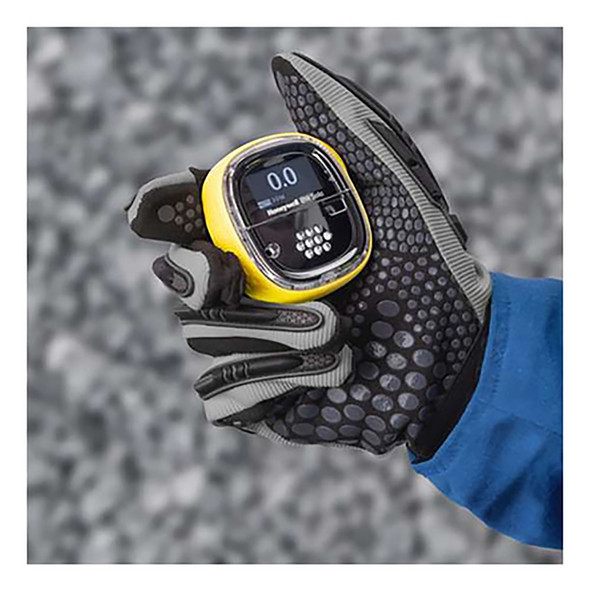
BW Solo Single Gas Monitor
BW Technologies Ltd.
$466.00 - $568.00Honeywell BW™ Solo is a easy to service single-gas detector with BLE connectivity that provides real-time visibility into the status and safety of hazardous-area workers, helping companies respond...$466.00 - $568.00 -
On Sale


Suspension Trauma Steps FS902
SafeWaze
Now: $32.15Was: $35.38The Suspension Trauma Steps FS902 is a 6' suspension trauma strap for rescue. Designed to be deployed after a fall and relieve pressure from the legs of the victim. Suspension Trauma Steps relieve...Now: $32.15Was: $35.38 -

Manhole Guard Rail
Allegro Industries
$395.95Designed to protect an area of 33" x 33". The 42" high guard rail collapses to only 44" square x 4" for easy storage. Single-piece construction offers easy, no tools-assembly. Heavy-duty safety...$395.95
Confined Space Entry — Frequently Asked Questions
Under OSHA 29 CFR 1910.146, a permit-required confined space is a confined space that contains or has the potential to contain a serious safety or health hazard. This includes spaces large enough for an employee to enter and perform work, with limited means of entry or exit, and not designed for continuous employee occupancy. A space becomes permit-required if it contains or has a potential for a hazardous atmosphere, material that could engulf an entrant, an internal configuration that could trap or asphyxiate, or any other recognized serious safety or health hazard. Examples include manholes, tanks, vaults, silos, utility tunnels, and some crawl spaces.
OSHA 1910.146 requires testing for three primary atmospheric conditions before entry and continuously during occupancy:
- Oxygen content: safe range is 19.5%–23.5%. Below 19.5% is oxygen-deficient; above 23.5% is oxygen-enriched and increases fire/explosion risk.
- Flammable gases and vapors: must be below 10% of the Lower Explosive Limit (LEL) for safe entry; work must stop above 25% LEL.
- Toxic air contaminants: most commonly carbon monoxide (CO) and hydrogen sulfide (H₂S), tested against OSHA Permissible Exposure Limits (PELs).
A 4-gas monitor (O₂, LEL, CO, H₂S) such as the GasAlert Max XT II, BW Clip4, or BW Flex4 covers all required parameters in a single wearable instrument.
A single-gas monitor detects only one specific gas — for example, the BW Clip Real-Time detects one gas (CO, H₂S, O₂, or SO₂ depending on the model) and provides up to 3 years of maintenance-free continuous operation. Single-gas monitors are ideal when a specific hazard is known and the space is routinely entered.
A multi-gas monitor (4-gas) simultaneously measures O₂, LEL, CO, and H₂S in a single unit. For most permit-required confined space applications where the full hazard profile is unknown or variable, a 4-gas monitor is the standard recommendation and satisfies OSHA's requirement to test all potential atmospheric hazards before and during entry.
OSHA 1910.146(k) requires that employers provide, before entry, retrieval equipment capable of non-entry rescue wherever feasible. Standard equipment for a compliant confined space rescue setup includes:
- Tripod system — provides a stable anchor point above the entry point for vertical lifting. The French Creek 50' Tripod System R50G-TP7 includes a 7' aluminum tripod and 3-way rescue SRL.
- Full-body harness — entrants must wear a retrieval harness with a chest or wristlet attachment point. Harnesses must meet ANSI Z359 and be rated for rescue retrieval loads.
- Retrieval line or SRL — connects the entrant's harness to the tripod winch for non-entry retrieval by the attendant.
- Rescue ladder — for conscious entrants in vertical spaces, the SafeWaze 22' Rescue Ladder allows self-rescue with topside assistance.
Forced-air ventilation is required when atmospheric testing indicates a hazardous atmosphere that can be controlled. A ventilating blower is positioned at the entry point to force fresh air into the space, diluting and purging contaminants before entry and continuously during occupancy. Key selection factors include:
- Duct size: 8" blowers suit most manholes and vaults; 12" blowers provide higher CFM for larger tanks and silos.
- Power source: electric blowers for indoor or powered sites; pneumatic or explosion-proof models for atmospheres with flammable vapors.
- Duct length: Allegro blowers ship with 25' ducting, which covers most standard entry depths. Extended ducting is available.
Ventilation reduces but does not always eliminate hazards — continuous atmospheric monitoring during occupancy is still required regardless of active ventilation.
Yes. Safe-Fast provides gas monitor service and calibration for confined space instruments. Gas monitors must be bump-tested before each day's use and fully calibrated at manufacturer-specified intervals (typically every 6 months) per OSHA and instrument manufacturer requirements. We also offer equipment rental for confined space entry equipment including tripod systems and gas monitors for infrequent or project-based entries. Call 1-800-723-3620 for details.